

English Version | Deutsche Version
Back in early March, we reported on the launch of comici MANGA, a new international platform for digital manga. Operated by the Japanese company comici Inc., the service brings together various manga magazine labels under one unified platform.
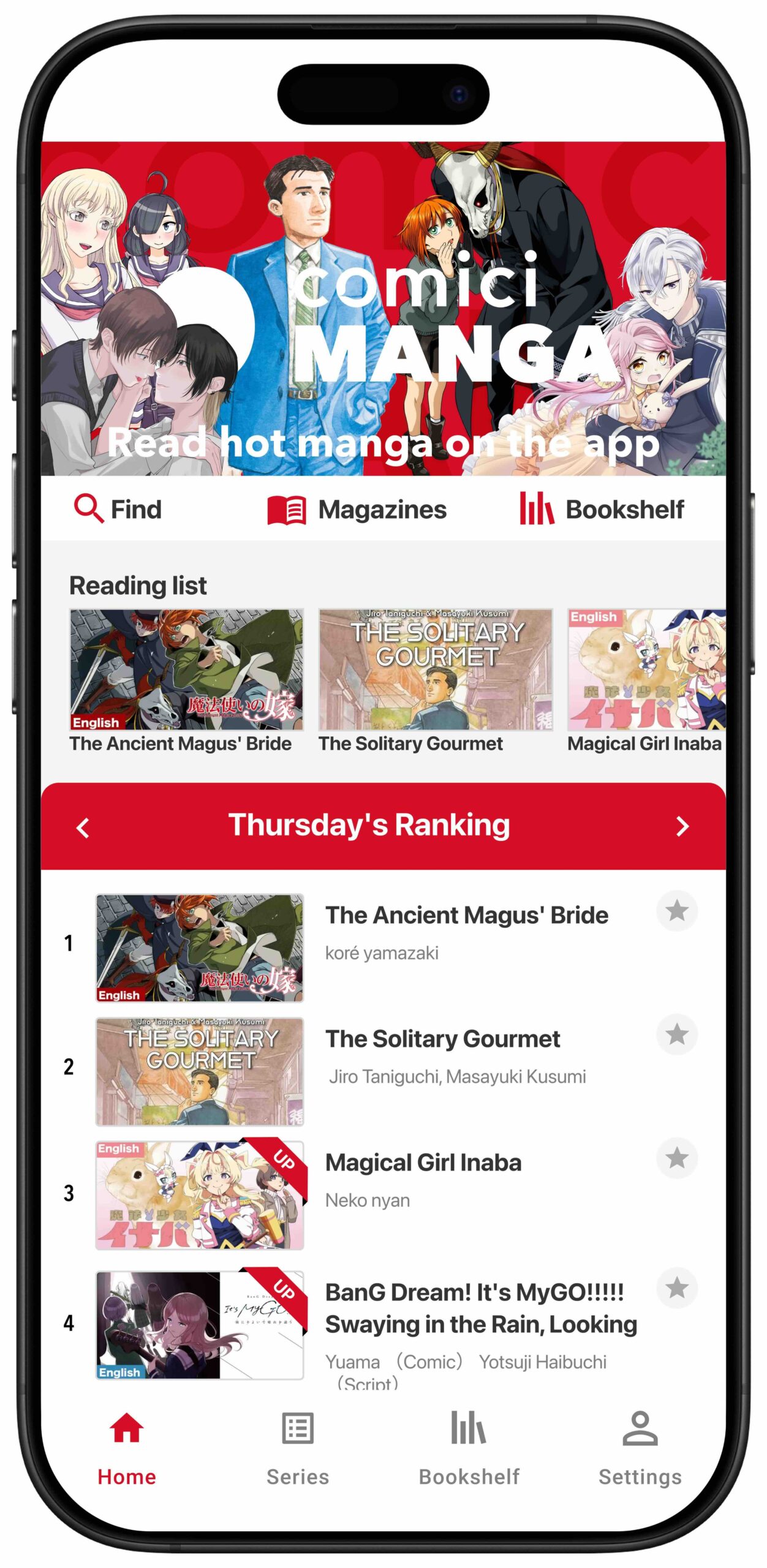
The service follows the concept of traditional manga magazines and combines titles from different publishers in a single place. Readers can discover a wide variety of genres, including fantasy, boys’ love, villainess stories, and romcoms, with well-known series such as »The Ancient Magus’ Bride« also being part of the lineup.
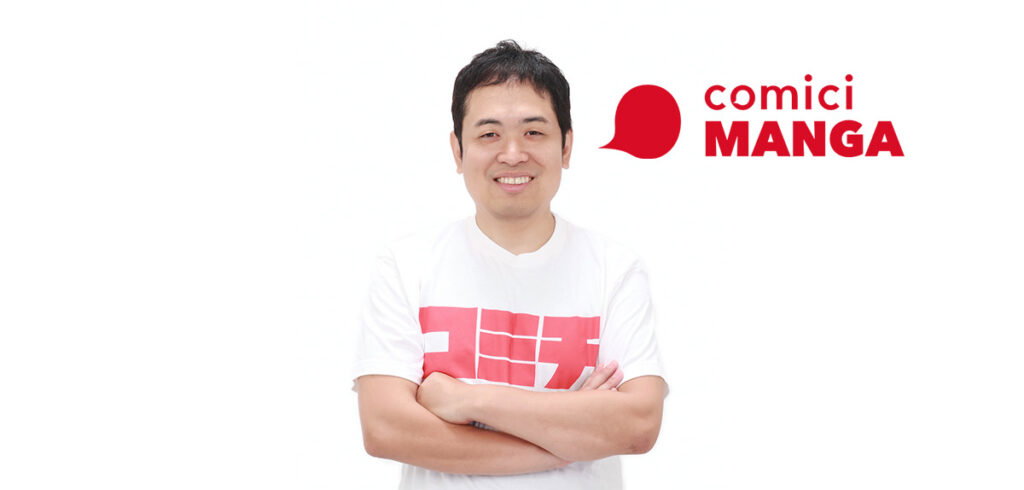
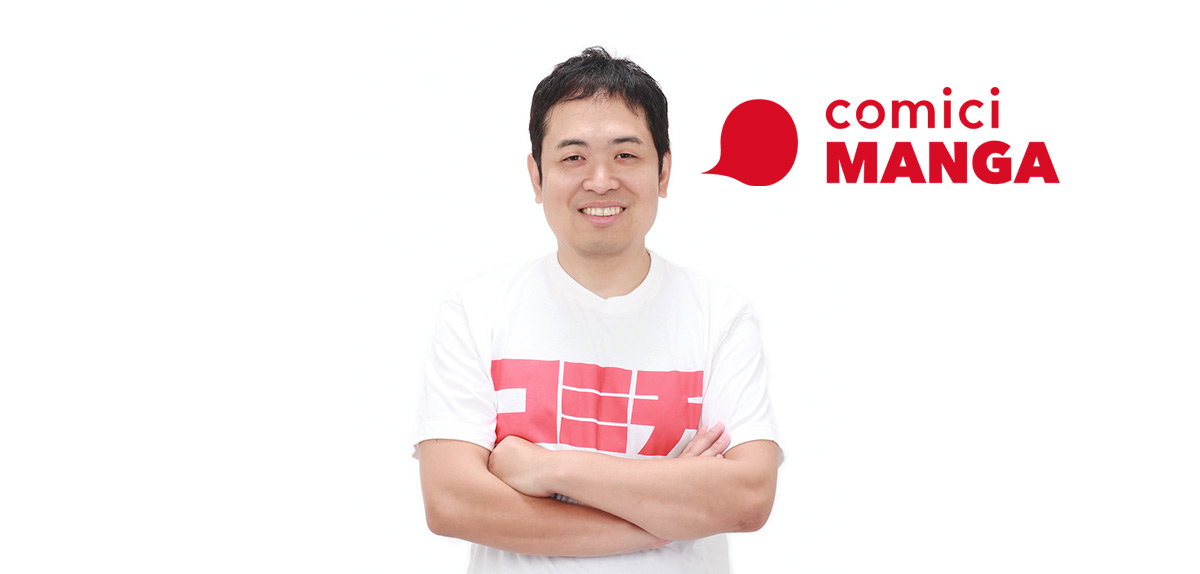
We recently had the opportunity to speak with Daisaku Manda, CEO of comici MANGA, about the platform, the international manga market, and the company’s future plans.
Interview with Daisaku Manda
Hello Daisaku Manda, thank you very much for taking the time to speak with Manga2You. As many of our readers may not yet be familiar with your work, could you start by briefly introducing yourself and telling us a bit about your background and career path?
My name is Daisaku Manda, and I am the founder and CEO of comici.
I started my career in the IT industry, but I have always been deeply connected to manga. I grew up reading manga magazines in rural Japan, and that experience shaped how I think about storytelling and distribution.
With comici, I wanted to build infrastructure for the manga industry — not just to distribute content, but to support creators, publishers, and readers in a more connected way.
Recently, your new international platform, comici MANGA, officially launched. One of your stated goals is to more closely connect mangaka, publishers, and readers, to make Japanese cultural content more accessible worldwide, and to generate valuable insights for the industry. In concrete terms, what sets comici MANGA apart from other international manga platforms in pursuing this approach?
What makes comici MANGA different is that we focus on both distribution and infrastructure.
Most platforms focus on delivering content to readers. We go further by connecting creators, publishers, and data into one system.
In practice, this means not only offering a place to read manga, but also enabling publishers to understand global audiences and make better decisions. It’s about building a long-term ecosystem, not just a content platform.
In recent years, a wide range of webtoon platforms have emerged, many of which – unlike traditional manga services – are readily accessible across Europe. While the manga market here is still largely driven by print, with digital offerings often playing a secondary role, webtoons were designed for online consumption from the outset and have therefore seen rapid adoption, with print editions typically following later. From your perspective, what factors have led to such different developments in the digital markets for manga and manhwa?
The difference comes from how each format was originally designed.
Webtoons were created for smartphones from the beginning, so they adapted quickly to digital consumption. Manga, on the other hand, was built around print magazines, which created a very strong domestic ecosystem in Japan.
Because of that, manga did not need to adapt to digital as quickly. Now, as the market becomes global, we are seeing a transition where manga is starting to evolve its digital distribution.

Where do you see the greatest potential of comici MANGA? And in your view, what are the key reasons why international publishers should consider building their own platforms within the comici ecosystem?
The greatest potential lies in connecting fragmented markets.
Today, manga is global in terms of popularity, but the infrastructure is still fragmented by country and publisher.
By building a shared platform and data layer, we can help publishers reach global audiences more efficiently, while also enabling new titles to find their readers.
For publishers, joining the comici ecosystem means gaining both distribution and insight.
At present, titles on comici MANGA are available exclusively in English. However, many of our readers would also welcome German translations. Are there already any plans to expand the platform to include additional languages – particularly German – in the future?
Yes, expanding languages is very important for us.
We started with English because it allows us to reach a global audience quickly, but we are actively considering additional languages, including German.
However, expansion is not just about translation — it also involves localization quality, distribution strategy, and market fit. We want to approach this carefully.
Do you see it as a viable approach for German publishers, for example, to join forces and, with your company’s support, build a shared online manga platform based on a subscription model – essentially a German-language version of comici MANGA?
Yes, I believe that is a very interesting and viable approach.
In Japan, manga has historically been distributed through shared platforms like magazines. Recreating a similar model digitally in other regions could be very powerful.
If publishers collaborate on infrastructure while maintaining their own editorial identity, it can create both efficiency and diversity.
For its English releases, comici MANGA relies in part on artificial intelligence. In Germany, in particular, the use of AI in this area is regarded quite critically—especially due to concerns that it may undermine the role of human translators and risk losing linguistic nuance, cultural context, and localization quality. At the same time, you are deliberately embracing this technology to scale more quickly, further develop your system, and expand internationally. From your perspective, does this strong focus on growth and efficiency inevitably come at a cost? And to what extent might international platforms also pose risks for Japanese or local publishers?
There is always a trade-off, but I don’t think it is a simple »either-or« situation.
AI can significantly improve speed and scalability, but quality remains critical. Our approach is to use AI as a support tool, not a replacement for human expertise.
We believe the future lies in combining technology with human creativity and editorial judgment.
A central component of your platform is the collection and analysis of user data to make decisions about serialization more data-driven and less reliant on the intuition of editors and publishers. At the same time, you emphasize that this approach can also help niche titles find their audience more easily. Do you see any contradiction in this? Is there not a risk that niche titles could be disadvantaged from the outset – or discontinued more quickly – based on such data? And in your opinion, do quantitative metrics ultimately take precedence over years of editorial experience?
I don’t see it as a contradiction — rather, as an opportunity.
Data can help surface niche titles that might otherwise be overlooked. At the same time, it is important not to rely on short-term metrics alone.
Editorial experience remains essential, especially for long-term value creation. Our goal is to combine both: data for visibility and editors for vision.
For many readers, the appeal of manga goes beyond the act of reading itself and includes engaging with a community of like-minded fans. An international platform, in particular, has the potential to foster strong communities and enable global interaction. However, your website currently offers neither a comment function nor a forum. Does this not mean that an important aspect of the medium is being lost? And what were the reasons for initially deciding against implementing such community features?
Community is very important, but timing and design matter.
We intentionally focused first on building the core experience — content and discovery.
Community features will come later, but we want to design them carefully to ensure they truly enhance the experience, rather than just adding noise.
From your perspective, is it inevitable that physical and digital publications will increasingly converge? Or can print editions and online platforms continue to coexist in the long term? In this context, how do you assess the future of print media and e-books – do you expect a lasting coexistence, or will the market ultimately move toward fully digital platforms?
I believe print and digital will continue to coexist.
They serve different purposes: print offers a physical, collectible experience, while digital provides accessibility and scale.
Rather than replacing each other, they will likely complement each other over the long term.
The rising media consumption among teenagers and young adults is frequently a subject of critical debate. A further shift of manga into the digital space is therefore unlikely to be met with universal approval. Do you also regard it criticaly to move a medium that has traditionally been strongly rooted in print increasingly into apps and onto screens – particularly in light of already growing screen time?
I understand the concern, but I don’t see it as entirely negative.
Digital platforms can make manga more accessible, especially to new audiences who might not encounter it otherwise.
The key is balance — not replacing print, but expanding access.
You grew up in a rural area of Kumamoto, at the foot of Mount Aso, surrounded by manga magazines and with plenty of time spent in nature, before later pursuing a career in the IT industry. Do you ever find yourself missing that more simple, unhurried time – the quiet of rural life, the slower pace, and the experience of being consciously offline?
Yes, I do think about it sometimes.
Growing up in a quiet environment, with time to read and think, was very valuable. That experience shaped my relationship with manga.
Even now, I make it a point to go camping in the mountains about once a month. It’s a way for me to disconnect from digital life and reset.
In a way, I try to keep that balance — between being online and offline — even today.

If you could read a manga again for the very first time and rediscover it completely, which one would you choose?
If I had to choose, I would say the works of Osamu Tezuka.
Rather than a single title, I would want to experience his storytelling again for the first time — the sense of discovery, the emotional depth, and the way he shaped the foundation of manga itself.
Those early encounters stay with you, and in many ways, they are what inspired me to be involved in this industry.
To wrap things up, if we could grant you one wish and bring a character of your choice from a manga into the real world – who would you choose?
That’s a difficult question.
Rather than choosing a specific character, I’m more drawn to the values they represent.
I personally resonate with ideas influenced by Buddhism, as well as the words often attributed to Gandhi: »Live as if you were to die tomorrow. Learn as if you were to live forever.«
If I could bring something into the real world, it would be that kind of mindset — wishing for peace, spending meaningful time with family and friends, and trying to make the world a little better.
In many ways, I think those values are what great manga often express.
Thank you very much for this open and insightful conversation.
Thank you very much for this opportunity. It was a pleasure to share our thoughts.
Dieser Artikel enthält Affiliate-Links. Wenn du über diese Links einkaufst, erhalten wir eine Provision. Es entstehen keine zusätzlichen Kosten. Mehr dazu.
Ooo das ist sehr interessant. Für mich sind englische Manga Apps überhaupt nicht interessant gerade weil die auf englisch sind wenn da was auf deutsch kommt und echt jetzt tamon drauf da man an die neueste Kapitel schwer ran kommt, hab ich nix gegen ein Abo solange es max 13€ ist oder so. Das würde ich aufjedenfall unterstützen. Auch wenn das auf deutsch kommt. Aktuell zu sein ist nochmal was ganz anderes. Ich hoffe diese. Person macht sachen auf deutsch und bringt echt jetzt tamon auf deutsch mit neueste Kapitel. Dann hat man mich garantiert mit nem Abo kann ich sagen. Gibt viel zu wenig deutsche Manga Apps. In Englisch gibst mehr als genug. Wird Zeit das sich was ändert!